



Fave: Why It’s Harder for Female Artists to Succeed

- September 18, 2026

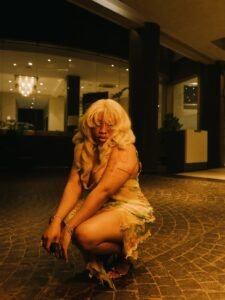
For a female artist in Nigeria, sometimes the first question is not, “How good is her music?” It is, “How does she look?” That is the uncomfortable reality Nigerian singer Fave says many female musicians have to navigate as they try to build successful careers in the music industry.
Speaking on a recent episode of the Afropolitan Podcast, the Baby Riddim singer opened up about what she sees as a major double standard between male and female artists, arguing that women are often judged on their appearance, clothing and perceived sex appeal before their music gets the attention it deserves.

According to Fave, this is one of the reasons she believes it is harder for female artists to succeed.
ALSO READ:
Ayra Starr’s Starr Girl: The Album That Finally Shows Us Who She Is Becoming
Tems Delivers Stunning BET Awards 2026 Performance Despite Missing Out on Award Wins
Ayra Starr Reveals the Surprising Way Her Biggest Ideas Are Born
Fave says female artists are judged beyond their music
Fave did not mince her words when discussing the expectations placed on women in African music. She argued that female artists are often measured by factors that have little to do with their actual musical ability. “It’s harder for female artists to blow,” she said, explaining that women can be judged by what they wear and even whether their bodies conform to certain beauty expectations.
She specifically pointed to the scrutiny around women’s bodies, saying that conversations about female artists can quickly move away from their music and towards their physical appearance. For Fave, that shift is part of the problem.

“It’s never really about the music”
One of the strongest points Fave made was her argument that female artists can find themselves being discussed through the lens of sexuality rather than artistry. She said conversations about women in music can become more about “people’s sexual desires or their fantasies about you” than the actual music they create. That, she believes, creates another hurdle for women trying to establish themselves.
Instead of an audience first asking whether a song is good, She argues that some female artists are forced to deal with conversations about their bodies, clothes, skin and overall appearance.
She also referenced the scrutiny she has personally faced online, including discussions about her appearance and skin tone.

Fave says men are not held to the same standard
The singer also compared the experience of female artists with that of their male counterparts. In her view, male artists have considerably more freedom to simply exist as musicians without the same level of scrutiny over their bodies or clothing. “But when it comes to men, they aren’t held to that same standard,” she said.
Her argument is not that image does not matter in entertainment. Rather, she believes the standards applied to women can become so intense that appearance sometimes overshadows the music itself.
“Female artists always try to do 10 times more”
Fave went further during the conversation, saying women often have to work much harder simply to remain visible.
She said that male and female artists are not always held to the same standards, female musicians can feel pressure to do significantly more to remain part of the conversation. That pressure can manifest in music, fashion, performances, branding and the constant need to maintain public attention.
For an artist trying to build a career, it creates an exhausting balancing act. Be talented, look good, dress correctly, stay relevant, give great performances and somehow make sure the conversation remains about the music.
Fave says women bring more to their performances
Interestingly, Fave did not stop at criticism. She also praised the performance abilities of female artists. According to her, female musicians often put considerable effort into their live performances and give everything they have on stage.
She believes that despite the additional pressures women face, female artists continue to prove themselves through their performances. That part of her argument is particularly interesting because it shifts the conversation from simply discussing the difficulties women face to recognizing the work they put into their careers.
The pressure does not end with appearance
The podcast conversation also touched on some of the difficulties Fave says women can encounter behind the scenes. She spoke about encountering industry figures who, according to her, were reluctant to work with female artists because they considered women more difficult to manage. She also alleged that female artists can encounter unwanted sexual advances when seeking opportunities within the industry.
Those are Fave’s personal claims and experiences, rather than independently established facts about the entire Nigerian music industry. But they add another dimension to the conversation.
Is image part of being a modern music star?
There is another side to the debate. Music has always been visual. Artists build brands around their clothing, music videos, performances, social media presence and personal identity. Male and female musicians alike use fashion and image as part of their careers.
The question Fave raises, however, is whether female artists are given the same freedom to control that image. . Can a woman choose to dress modestly without being considered boring. Can she dress boldly without the conversation becoming entirely about her body? Can she simply release a great song without the public turning its attention to her appearance?
Those questions are at the heart of Fave’s argument.
Nigerian female artists are already making their mark
Whatever one’s view of Fave’s argument, there is no denying that Nigerian female artists have become major forces within Afrobeats and the wider African music industry. From Tiwa Savage and Yemi Alade to Tems, Ayra Starr, Simi, Teni and Fave, Nigerian women have continued to build careers that reach far beyond the country’s borders.
Tems has become one of the most internationally recognized Nigerian artists of her generation. Ayra Starr has established herself as a major global pop and Afrobeats star. Tiwa Savage has spent more than a decade building an international career.
Their achievements demonstrate the enormous potential of Nigerian female musicians. But Fave’s argument asks us to look at what happens before an artist reaches that level.
The bigger conversation
Fave’s comments have opened a conversation that goes beyond one artist. Should female musicians be judged primarily by their music, or has appearance become an unavoidable part of the price of fame?
There is no simple answer. Image is undeniably part of modern entertainment, but the singer’s argument is that women often face expectations that extend beyond normal branding and into their bodies, sexuality and personal appearance.
Whether audiences agree with her or not, it is a conversation worth having. Because behind every viral photo, every outfit debate and every comment about an artist’s body is a musician trying to be heard. And perhaps that is Fave’s biggest point.
Before we judge the woman, maybe we should listen to the music.
MORE ARTICLES:
Yemi Alade Has Stopped Chasing the Moment, and It’s Yemi Alade Explains Why
3 Music Videos to Watch Now: Yemi Alade, Greatman Takit & eLDee
Burna Boy Makes History As First Nigerian Artiste To Surpass 4 Billion YouTube Views

Desauce Magazine is more than a blog, it is a cultural journal capturing the rhythm of Nigeria. From music and film to lifestyle and social issues, we tell stories that reflect the energy, struggles, and brilliance of our people.