


Pete Edochie’s Legacy in Nollywood: Beyond Okonkwo

- November 27, 2026
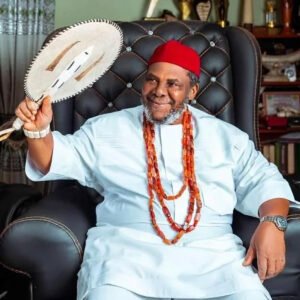
There are actors whose faces become familiar, and there are actors whose very presence commands attention. Pete Edochie belonged to the latter.
A deep voice, deliberate speech, an imposing presence and an extraordinary ability to deliver traditional proverbs made him one of the most recognizable figures in African cinema.

For millions of viewers, he was the traditional ruler who commanded respect, the father whose words carried authority, the wealthy patriarch whose decisions could change the fate of an entire family, and the village elder whose wisdom could settle the most complicated disputes.
But reducing Pete Edochie to these familiar characters would be doing his legacy a disservice.
ALSO READ:
Francis Duru Dies at 57, Nollywood Mourns the Veteran Actor Behind Rattlesnake’s Iconic Ahanna
Olu Jacobs Dies at 84: Remembering the Legendary Actor Who Helped Shape Nollywood
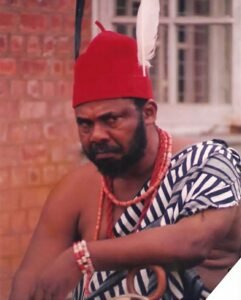
Behind the commanding screen personality was a broadcaster, a trained communicator and an actor whose contribution to Nigerian storytelling stretched across generations.
With his death at 79 on November 25, 2026, Nollywood has lost one of its most recognizable cultural figures. But beyond the tributes and memories, there is a bigger question worth considering: what exactly did Pete Edochie leave behind?
Before Nollywood, There Was Broadcasting
Long before he became a household name in Nigerian cinema, Pete Edochie had established himself in broadcasting.
Born on March 7, 1947, in Zaria, Kaduna State, he began his broadcasting career in February 1967 with the Eastern Nigerian Broadcasting Corporation.
He gradually rose through the profession, eventually occupying senior positions at the Anambra Broadcasting Service, including Director of Programmes and Deputy Managing Director.
In 1980, he received professional broadcasting training at the BBC. This background is particularly important when examining his acting career.
Edochie understood the power of language, timing, delivery and communication. These qualities would eventually become some of his greatest assets on screen. His voice was not simply deep. He knew how to use it. He understood when to pause, when to lower his tone and when a single sentence could carry more weight than an entire argument.
Perhaps that broadcasting background contributed to the remarkable control audiences came to associate with his performances.
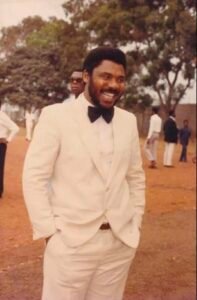
Okonkwo: The Role That Changed Everything
In 1987, Pete Edochie portrayed Okonkwo in the Nigerian Television Authority’s adaptation of Chinua Achebe’s literary masterpiece, Things Fall Apart.
It was the defining moment of his acting career. Okonkwo was not an easy character to portray. He was a celebrated wrestler, a respected warrior and a man obsessed with strength, reputation and the fear of appearing weak.
Beneath his authority, however, was a troubled man whose rigid understanding of masculinity eventually contributed to his downfall.
Edochie brought all these contradictions to the screen. He portrayed a man who could command an entire community but struggled to understand the emotional consequences of his own actions.
That distinction is important. Okonkwo was not simply a powerful African man. He was a complicated character shaped by pride, fear, ambition, tradition and personal tragedy.
Edochie’s interpretation helped bring Achebe’s character to life for television audiences and introduced him to a much wider international audience.
His performance became so closely associated with the character that generations of viewers would continue to recognize him as Okonkwo long after the production.
The Making of Nollywood’s African Patriarch
Following the success of Things Fall Apart, Edochie became increasingly associated with roles that demanded authority and commanding screen presence. He played traditional rulers, wealthy businessmen, fathers, community leaders and influential elders.
Films such as Igodo and Rituals further established his place in Nigerian cinema, while his appearance in Genevieve Nnaji’s 2018 film Lionheart introduced him to another generation of movie audiences.
In Lionheart, he played Chief Ernest Obiagu, a wealthy businessman and family patriarch. It was a familiar territory for Edochie, but his presence remained effective.
There was something distinctive about the way he occupied these roles. He did not always need dramatic physical movement or exaggerated expressions to dominate a scene. Sometimes, it was simply the way he sat, looked at another character or delivered a sentence.
His performances helped popularize a particular screen image of the African patriarch, a man whose authority was expressed through language, tradition, wealth, age and social standing.
That image became an enduring part of Nollywood storytelling.
The Voice, The Proverbs and the Power of Language
One of Pete Edochie‘s most recognizable contributions was his delivery of traditional African expressions and proverbs.
In many of his films, conversations were not merely exchanges of dialogue. They became opportunities to communicate cultural values, warnings, wisdom and sometimes subtle threats.
His characters often spoke with the confidence of men who believed that experience was the greatest teacher.
This style resonated with audiences because it reflected familiar elements of traditional African society, where elders were often regarded as custodians of history, wisdom and communal values.
Edochie understood how to make those words sound convincing.
He could deliver a proverb and allow the audience time to absorb its meaning. His pauses, facial expressions and vocal control gave his dialogue a distinctive rhythm.
For younger viewers who grew up watching his films, his performances also became an introduction to the richness of traditional expressions and storytelling.
In an industry increasingly influenced by fast-paced dialogue and contemporary urban culture, his approach represented a different kind of cinematic experience.
Beyond the Screen: The Recognition He Earned
Pete Edochie’s contribution to Nigerian entertainment did not go unnoticed. In 2003, he received the national honour of Member of the Order of the Niger (MON).
He was also recognized with the Africa Magic Viewers’ Choice Awards Industry Merit Award in 2014, among other honours celebrating his contribution to African cinema.
These recognition reflected a career that extended beyond commercial entertainment. He had become a cultural figure whose work was recognized across generations and beyond Nigeria’s borders.
His influence was also reflected in the younger actors who followed him into the industry, including his sons Linc and Yul Edochie.
While their careers developed along different paths, the Edochie name became firmly established in Nigerian entertainment.
Did Nollywood Ever Produce Another Pete Edochie?
This is perhaps the most interesting question his passing leaves behind.
Nollywood has produced several outstanding actors capable of commanding attention. The industry has also evolved considerably, with younger performers exploring more contemporary characters, storytelling techniques and cinematic styles.
But Pete Edochie occupied a particular space. He represented an era when an actor could become synonymous with a certain kind of character and still remain relevant across decades.
His commanding performances helped establish the screen image of the African patriarch, but his work in Things Fall Apart demonstrated that he could also portray vulnerability, pride, tragedy and human contradiction. That is what separates a memorable character from a lasting acting legacy.
The industry may produce another outstanding actor who plays kings, fathers and traditional rulers. But recreating the combination of voice, timing, cultural expression and screen presence that defined Edochie will be a different challenge.
Perhaps the question should not be whether Nollywood will find another Pete Edochie. It should be whether the industry will continue producing actors who take storytelling, character development and cultural representation as seriously as he did.
An Iroko Has Fallen, But the Stories Remain
Pete Edochie’s death marks the end of a remarkable professional journey that began in broadcasting and grew into one of the most recognizable acting careers in African entertainment.
He gave audiences Okonkwo, but he also gave them countless other characters through which they encountered authority, tradition, family, ambition and the complicated nature of human relationships.
His performances became part of the memories of people who grew up watching Nigerian films, and his voice became one of the defining sounds of an era in Nollywood.
Perhaps that is the real measure of his contribution.
Not simply the number of films he appeared in, the awards he received or the characters he portrayed, but the fact that his work became part of how generations of Nigerians remember their cinema.
Pete Edochie may be gone, but beyond Okonkwo, the stories he helped tell will continue to live.
MORE ARTICLES:
Agbara Nla: The Return, Nollywood’s Biggest Box Office Hit
10 Must-Watch Nollywood Movies 2026
Nollywood’s Money Makers: 4 Movies Dominating the 2026 Box Office

Desauce Magazine is more than a blog, it is a cultural journal capturing the rhythm of Nigeria. From music and film to lifestyle and social issues, we tell stories that reflect the energy, struggles, and brilliance of our people.