



Can Asake’s New Tour Match The Energy Of The Lungu Boy Era? From Record Breaking M$NEY To A New Identity

- May 27, 2026
There is a certain kind of pressure that follows success. Not the pressure of being noticed, but the pressure of being expected to outdo yourself every single time.

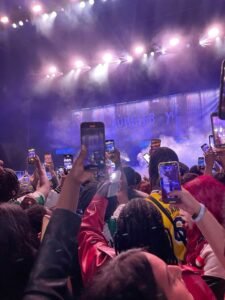
For Asake, that pressure may be arriving again. As the singer prepares for his upcoming “In God We Trust” tour, fans are not only asking where he is performing next, they are asking something bigger. Can this new era recreate the raw electricity, unforgettable moments and cultural impact that surrounded the Lungu Boy phase?
• Asake’s upcoming In God We Trust Tour is arriving with huge expectations from fans still attached to the energy of the Lungu Boy era.
• His latest album M$NEY shattered records with 55.98 million Spotify opening week streams, becoming the biggest opening week for an African album.
• The project also set a Spotify Nigeria opening week record of 37.5 million streams and topped the UK Apple Music chart.
• M$NEY is Asake’s first full project under his independent label Giran Republic, signaling a new level of ownership and creative freedom.
• One thing feels different now, Asake’s performances are becoming more cinematic and brand driven. The question is no longer “Can he go bigger?” It is “Can he recreate that Lungu Boy magic?”
For many people, Lungu Boy did not just feel like an album era. It felt like movement. The interesting thing is that Asake appears to be changing the formula entirely.
ALSO READ:
“Asake M$NEY Album Review: Has Success Made Asake Too Comfortable?”
Something Big Is Happening in May 2026 for Nigerian Music, and the Lineup Is Wild
Asake’s M$NEY Is Taking Over Apple Music Nigeria Right Now
Asake’s M$NEY Is Coming, Why This Album Might Change Everything
His live performances increasingly feel less like straightforward music concerts and more like carefully designed visual experiences. There is more symbolism, more visual storytelling, more attention to stage identity and atmosphere. The artist who once felt almost unpredictable and street rooted now seems to be leaning toward something more cinematic.
That transition is not surprising. After stepping into a more independent path, Asake appears to be pushing his personal identity harder than before. Artists often reach a point where they stop simply releasing songs and start building worlds around themselves. The stage becomes part theatre, part music, part branding.
And right now, Asake seems to be entering that phase. The numbers behind his latest project suggest he has enough momentum to attempt it.

His recent album M$NEY exploded commercially, securing the biggest opening week streams for an African album in Spotify history, pulling 55.98 million streams during its opening week. It also established a new Spotify Nigeria opening week record with 37.5 million streams.
The album did not stop there. M$NEY also climbed to the number one position on the UK Apple Music chart, making Asake the first African artist to achieve five separate projects at the top of that chart.
Beyond charts and streaming numbers, there was another major statement hidden beneath those records. M$NEY became Asake’s first full length release under his own independent imprint, Giran Republic, in partnership with EMPIRE.
For artists, that matters. Going independent is not simply a business move. It is often a declaration. It says, “I want greater ownership of my sound, my image and my direction.”
Suddenly, the upcoming tour starts looking like more than another series of concert dates. Even the name itself tells a story. “In God We Trust” does not feel accidental.
Asake’s recent public appearances and messaging have carried a more reflective mood. There has been more talk around gratitude, faith, growth and perspective. For somebody who went from the streets of Lagos to shattering streaming records globally in less than four years, that evolution feels natural.
Success changes people. Not always by making them bigger, sometimes by making them quieter. Fans may still expect the shirtless stage jumps, the wild crowd reactions and the infectious chaos that made previous performances memorable. But artists evolve, and evolution sometimes means exchanging pure energy for something deeper.
That creates the big question, can this new tour recreate the feeling of the Lungu Boy era? Maybe the answer is not supposed to be yes. Maybe Asake is no longer trying to repeat what happened before. Or maybe he is trying to build something different entirely. And sometimes the artists who change the game are the ones who refuse to relive yesterday.
MORE ARTICLES:
The Ghetto Kids Light Up Shakira and Burna Boy’s “Dai Dai” World Cup Video
Ayra Starr Reveals the Surprising Way Her Biggest Ideas Are Born
Burna Boy and Shakira Confirmed for FIFA 2026 World Cup Anthem “Dai Dai”

Desauce Magazine is more than a blog, it is a cultural journal capturing the rhythm of Nigeria. From music and film to lifestyle and social issues, we tell stories that reflect the energy, struggles, and brilliance of our people.