


2Baba’s Oldest Young Man: What to Expect From His First Album in Six Years

- November 28, 2026
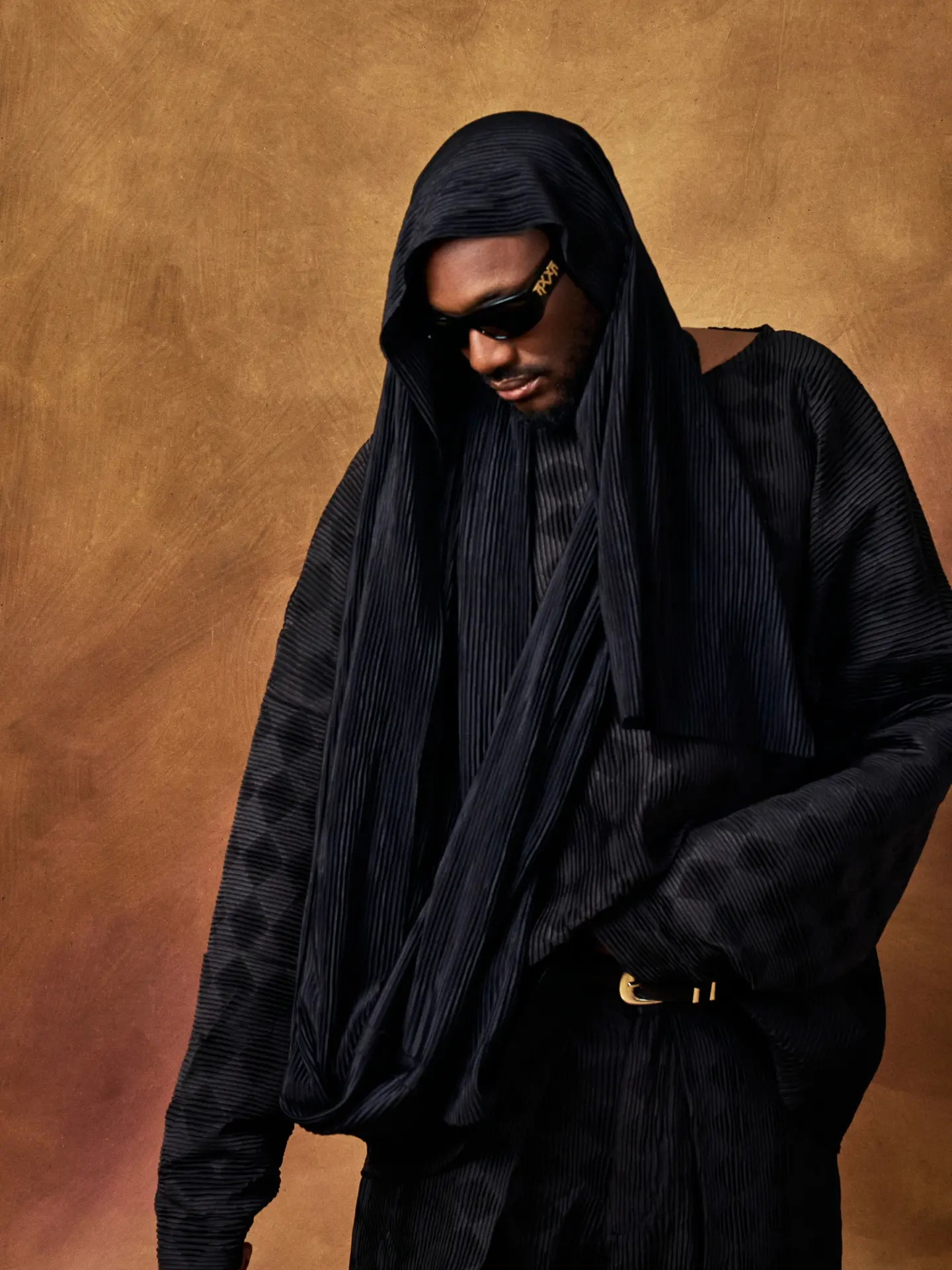
Six years is a long time in the Nigerian music industry. In an industry where sounds change quickly, new stars emerge almost every month and yesterday’s chart toppers constantly compete for relevance, staying connected to the conversation is no small achievement.

But some musicians have built careers that extend beyond trends.
For Innocent Ujah Idibia, popularly known as 2Baba, music has never been just about having the biggest song of the moment. From the days of Plantashun Boiz to his remarkable solo career, he has established himself as one of the defining voices in Nigerian Afropop.
Now, the legendary singer has returned with Oldest Young Man, his first full length studio album in six years.
Released on November 27, 2026, the 15 track project arrives six years after Warriors, his 2020 album that featured collaborations with Wizkid, Burna Boy, Tiwa Savage, Olamide and Peruzzi.
But with an entirely different generation now dominating Nigerian music, the question is not simply whether 2Baba can still make good music. It is whether he can remind listeners why his name remains relevant.
ALSO READ:
2Baba Announces ‘Oldest Young Man’ Album, Sets November 27 Release Date
Tuface, Burna Boy and the Firestorm of the Big 3 Debate
Oldest Young Man: A Title That Says It All
There is something interesting about the album’s title. At 51, 2Baba has spent nearly three decades navigating an industry that has transformed considerably since he first emerged. He has witnessed the transition from physical music sales and radio dominance to streaming platforms, social media promotions and global Afrobeats expansion.
Yet, the title Oldest Young Man suggests an artist who is comfortable with his age, experience and continued desire to create.
It captures an interesting contradiction. He is an established veteran, but he is not necessarily interested in behaving like someone whose musical journey has ended.
In an earlier announcement, 2Baba described the project as a reflection of his experiences and continued presence in the music industry.
That statement provides an important context for approaching the album. This is not simply another attempt to compete with younger musicians. It is an opportunity for an experienced artist to express where he stands today.
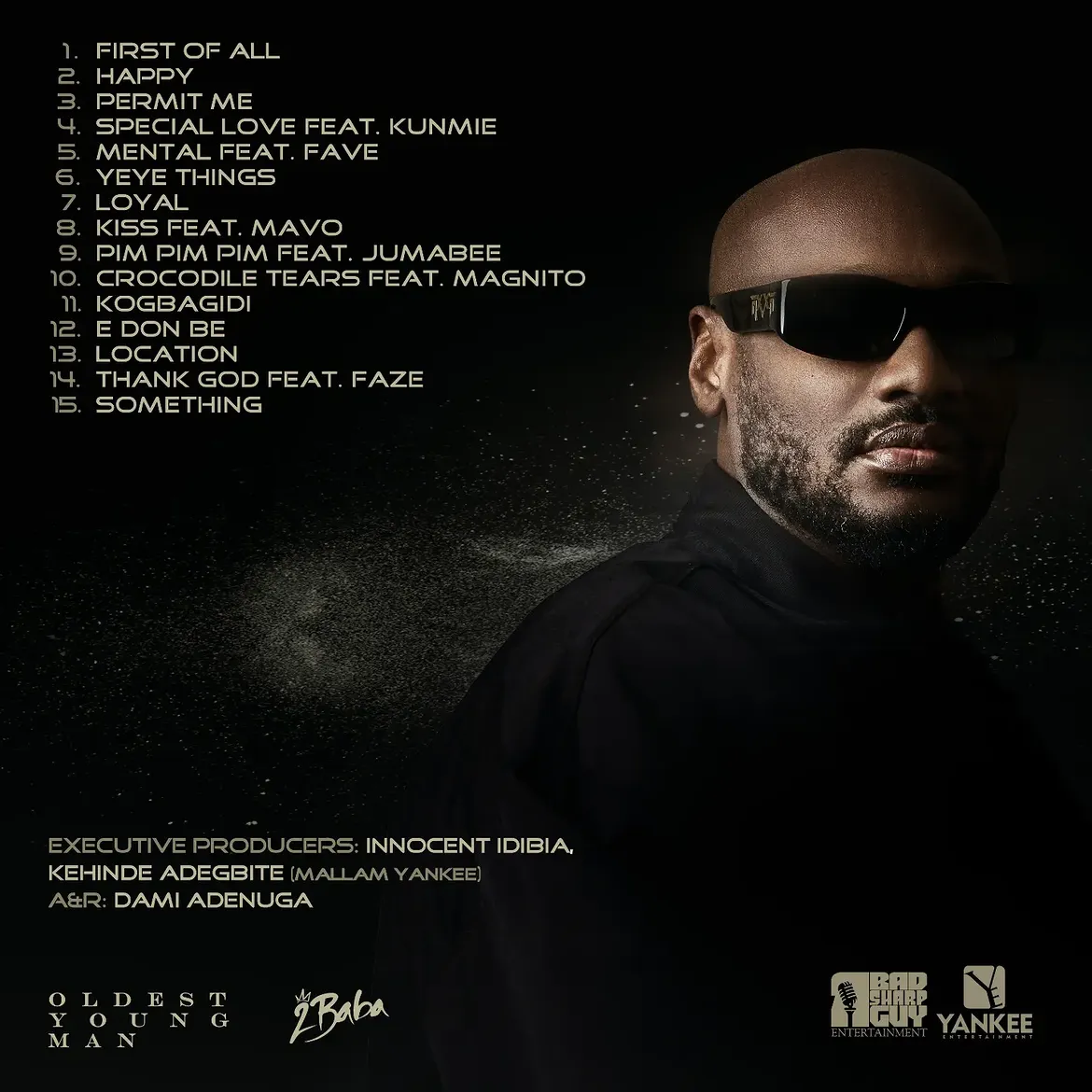
15 Tracks and a New Generation of Collaborators
One of the most interesting aspects of Oldest Young Man is its guest list. Rather than relying exclusively on established names from his generation, 2Baba brings together a mixture of established and emerging Nigerian artists.
The album features Faze, Fave, Kunmie, Mavo, Jumabee and Magnito.
The collaborations include:
- Special Love featuring Kunmie
- Mental featuring Fave
- Blow Me a Kiss featuring Mavo
- Pim Pim Pim featuring Jumabee
- Crocodile Tears featuring Magnito
- Thank God featuring Faze
This selection suggests an artist interested in maintaining a connection with contemporary Nigerian music while acknowledging the musical relationships and history that helped shape his career.
Fave and Kunmie represent younger voices with their own growing audiences, while Magnito and Jumabee introduce different creative personalities into the project.
However, the collaboration that will probably attract the most attention from longtime fans is the reunion with Faze.
2Baba and Faze: A Reunion Worth Celebrating
Before the solo careers, the awards and the international recognition, there was Plantashun Boiz.
The group, comprising 2Baba, Faze and Blackface, played an important role in shaping Nigerian popular music in the late 1990s and early 2000s.
Their music helped establish a new direction for Nigerian R&B and Afropop, with memorable melodies, emotional songwriting and a sound that connected strongly with young audiences.
Following the group’s separation, its members pursued individual careers.
2Baba became one of Nigeria’s biggest musical exports, while Faze also established himself as a respected solo performer.
Their reunion on Thank God is therefore more than just another guest appearance.
For listeners who grew up with Plantashun Boiz, it represents a nostalgic connection to an important chapter in Nigerian music history.
It also introduces younger listeners to a musical relationship that existed long before the current Afrobeats generation emerged.
What Does the Album Sound Like?
One of the interesting things about 2Baba’s musical identity is his ability to combine emotional songwriting with accessible melodies.
From African Queen to If Love Is a Crime, True Love and Oyi, his music has consistently demonstrated an understanding of melody, romance and relatable storytelling.
That identity remains an important reference point when approaching his latest project.
With 15 tracks and a runtime of approximately 44 minutes, Oldest Young Man offers a relatively compact listening experience.
The tracklist moves between love songs, personal expressions and collaborations that bring different musical personalities into the project.
There is also an interesting production lineup, with contributions from producers including DeeYasso, Keyz Music, Masterkraft, Duktor Sett and Tefa.
Rather than depending on a single producer or production direction, the album draws from different creative approaches.
This gives the project room to explore different sounds while maintaining 2Baba as its central musical voice.
Importantly, the presence of contemporary collaborators does not automatically mean that the veteran singer is abandoning the musical identity that made him successful.
Six Years After Warriors, Has Nigerian Music Changed Too Much?
When Warriors arrived in February 2020, the Nigerian music industry was already experiencing significant changes.
Wizkid, Burna Boy and Davido were expanding their international influence, while a new generation of artists was beginning to reshape the country’s sound.
Today, the industry has moved even further.
Artists such as Rema, Asake, Ayra Starr, Omah Lay and Shallipopi have introduced different musical directions, while streaming platforms have completely changed how music is distributed, consumed and promoted.
For an established musician returning with an album after six years, the challenge is finding the right balance between familiarity and reinvention.
Listeners want the 2Baba they know, but they also want to hear what he has learned and experienced since his last album.
That is where Oldest Young Man becomes particularly interesting.
The project arrives at a time when Nigerian music is increasingly embracing collaborations across generations. Established musicians are working with younger artists, while younger performers are also drawing inspiration from the pioneers who came before them.
2Baba’s decision to feature younger voices suggests an understanding that music must continue evolving.
2Baba’s Legacy Goes Beyond Another Hit Record
It is difficult to discuss Nigerian Afropop without acknowledging 2Baba’s contribution.
His journey began with Plantashun Boiz before he established himself as a solo artist with the release of Face 2 Face in 2004.
That album introduced one of the most recognizable Nigerian love songs of all time, African Queen.
Over the years, he followed with projects including Grass 2 Grace, The Unstoppable, Away and Beyond, The Ascension, Rewind, Select, Update and Warriors.
His catalog has influenced generations of Nigerian musicians, particularly through his approach to songwriting, melody and emotional expression.
At this stage of his career, another hit song would certainly be welcome, but the bigger conversation is about longevity. Can an artist remain creatively relevant without constantly chasing the sound of the moment? Can experience become an advantage in an industry that often celebrates whatever is newest?
Oldest Young Man provides another opportunity for 2Baba to answer those questions through music.
The Verdict: A Return Worth Paying Attention To
With Oldest Young Man, 2Baba has officially ended his six year wait for a new studio album.
The 15 track project brings together different generations of Nigerian musicians, revisits an important musical relationship through his collaboration with Faze and introduces listeners to a new chapter in his career.
Whether every track connects with listeners in the same way is a different conversation. However, the significance of the release goes beyond the immediate excitement surrounding a new album.
In an industry that constantly celebrates the next big thing, there is something refreshing about seeing an established artist continue to create, experiment and participate in the evolution of Nigerian music.
Perhaps that is the real meaning behind Oldest Young Man. He may have grown older, but the music is still calling.
MORE ARTICLES:
Rema’s E-Mortal Boy: Is He Taking Afrobeats in a New Direction?
2027 Grammys: Tems Leads Nigerian Nominees

Desauce Magazine is more than a blog, it is a cultural journal capturing the rhythm of Nigeria. From music and film to lifestyle and social issues, we tell stories that reflect the energy, struggles, and brilliance of our people.