


Ebola Is Back in Nigeria, Should You Be Worried?

- October 21, 2026
Dear Nigerian,
I need you to pay attention to this one, because when it comes to your health and the safety of the people you love, ignorance can be dangerous, but panic can be just as unhelpful.

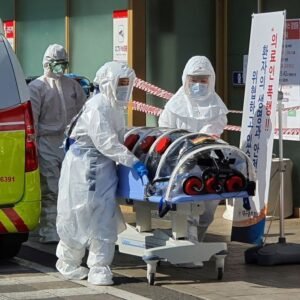
On Tuesday, October 20, 2026, the Federal Government confirmed a case of Ebola disease in Abuja. A woman who recently traveled to Nigeria from Uganda tested positive for the virus and is currently receiving medical care in isolation.
By the time the announcement was made, health authorities had already identified 44 people who might have been exposed to the infection. Contact tracing was underway, and the hospital where the woman received treatment was being supported to strengthen its infection prevention measures.
You have probably seen the headlines. You may even have received a WhatsApp message warning people to stay away from certain places or avoid travelling. Perhaps you are already wondering whether this is the beginning of another health crisis in Nigeria.
I understand that concern but before fear takes over, there are some important things you need to understand.
ALSO READ:
What Exactly Has Happened in Nigeria?
According to the Federal Ministry of Health and Social Welfare, laboratory tests confirmed the Ebola infection in Abuja on October 20. The patient reportedly developed symptoms on October 7 and sought treatment at a private hospital in Abuja on October 11. She was subsequently diagnosed with Ebola and placed in isolation.
The World Health Organization identified the infection as Ebola Bundibugyo virus disease, a particular type of Ebola virus associated with an ongoing outbreak that began in the Democratic Republic of the Congo.
Investigations are continuing to establish where the woman contracted the infection. Although she recently traveled through Uganda, that does not automatically mean she became infected there. Reports indicate that she had traveled to eastern Democratic Republic of the Congo before transiting through Uganda.
That distinction matters. In a situation like this, facts must come before assumptions. As of the official announcement on October 20, Nigeria had confirmed one case. Health authorities had identified 44 contacts for monitoring, but those contacts should not be mistaken for confirmed Ebola patients.
The immediate priority is to determine whether anyone else was infected and prevent further transmission.
Dear Nigerian, What Does This Mean for You?
You enter a crowded bus in Lagos. You visit a market in Ibadan. You attend a church service, go to work, visit a hospital or stand in a queue at a bank. With news of Ebola circulating, it is understandable to wonder whether these everyday activities have suddenly become dangerous.
But you need to understand how this virus spreads. Ebola is primarily transmitted through direct contact with the blood or other bodily fluids of an infected person who is experiencing symptoms, or through contact with contaminated objects and materials. It is not generally spread through the air in the same way as the common cold or influenza.
This means that hearing someone mention Ebola, sharing a public space with an ordinary member of the public, or reading a frightening headline does not automatically put you at risk. Your concern should be focused on avoiding potential exposure, maintaining good hygiene and following instructions from public health authorities.
There is a difference between being careful and living in fear. And right now, Nigeria needs informed citizens, not frightened citizens spreading information they have not verified.
These Are the Symptoms You Should Know
One of the difficulties with Ebola is that its early symptoms can resemble illnesses Nigerians already encounter regularly, including malaria and other infections. Possible symptoms include fever, severe headache, muscle pain, extreme weakness, vomiting, diarrhoea and abdominal pain. Unexplained bleeding can also occur in some cases.
Symptoms usually develop between two and 21 days after exposure. However, let me make something clear: having a fever does not mean you have Ebola. You should pay particular attention to possible symptoms if you have had contact with a confirmed case or believe you may have been exposed.
If you suspect exposure and begin to feel unwell, avoid close contact with other people and contact public health authorities for immediate guidance. Call ahead before going to a hospital so healthcare workers can prepare to receive you safely.
Do not attempt to diagnose yourself from a social media post, and do not wait until symptoms become severe before seeking help.
Forty Four Contacts, But What Are the Authorities Looking For?
The figure of 44 contacts is one of the most important details in this developing story. Contact tracing is a public health process used to identify people who may have come into contact with an infected person. Health authorities then assess their exposure, provide instructions and monitor them as appropriate.
In this case, the process may involve relevant healthcare workers, patients, caregivers and travel contacts. But identifying a contact does not mean that person has contracted Ebola. It simply means, health authorities need to establish whether exposure occurred and whether further action is necessary.
The speed and effectiveness of this process will be important in determining whether the infection can be contained without further transmission.
Nigeria has faced Ebola before. In 2014, an infected traveller from Liberia introduced the virus into Lagos. The country recorded 20 probable or confirmed cases, including eight deaths, before successfully ending the outbreak.
That experience demonstrated the importance of rapid diagnosis, isolation, contact tracing and effective cooperation between health authorities and the public.
Nigeria now has another opportunity to apply those lessons.
Can Nigeria Stop Another Ebola Outbreak?
This is the question many Nigerians will be asking. The Federal Government has activated its public health response, while the Nigeria Centre for Disease Control and Prevention is coordinating efforts with relevant authorities and international partners.
The current measures include contact tracing, enhanced surveillance and stronger infection prevention procedures at the hospital where the patient received treatment.
These are important steps, but the existence of a response system is not, by itself, proof that the situation has been fully contained. Investigations must continue, potential contacts must be followed up, and any additional cases must be identified quickly.
There is also a particular challenge with the Bundibugyo virus. Vaccines developed for other Ebola virus species cannot automatically be assumed to protect against this one. This makes early detection, appropriate medical care and strict infection prevention measures especially important.
For now, the public should follow verified updates rather than make assumptions about what will happen next.
Five Things You Can Do to Protect Yourself
Dear Nigerian, you do not need to abandon your daily activities simply because a case has been confirmed. You do, however, need to take sensible precautions.
1. Wash your hands regularly.
Use soap and water, particularly after visiting public places, using the toilet or before eating. Hand hygiene is a basic but important infection prevention measure.
2. Avoid contact with bodily fluids.
Do not touch the blood, vomit or other bodily fluids of anyone suspected of having Ebola. Leave the handling of potentially infectious materials to trained personnel with appropriate protective equipment.
3. Take possible exposure seriously.
If you believe you have had contact with a confirmed case, contact public health authorities promptly, even if you feel well. Follow their instructions on monitoring and further assessment.
4. Seek medical guidance if symptoms develop after possible exposure.
Do not assume it is malaria and begin self medication without considering your exposure history. Contact public health authorities before visiting a healthcare facility if Ebola is a possibility.
5. Stop spreading unverified messages.
A frightening WhatsApp broadcast is not an official health advisory. Before forwarding claims about affected hospitals, schools, markets or neighbourhoods, verify them through credible sources.
You can contact the Nigeria Centre for Disease Control and Prevention through its official toll free line, 6232, for information and guidance.
Dear Nigeria, Let Us Not Repeat the Mistakes of Panic
There is something we must discuss whenever an outbreak makes the news. Fear travels quickly. Sometimes, it travels faster than the information that could help us understand what is happening.
A single confirmed case can generate dozens of rumours. Before long, people begin accusing travellers, avoiding innocent individuals and circulating claims that have not been established by health authorities. That is dangerous in its own way.
We must take Ebola seriously without treating every traveller as a threat. We must encourage people to report possible exposure without shaming those who seek medical attention. And we must demand timely information from the authorities without inventing facts to fill the gaps.
The woman receiving treatment in Abuja is a patient who needs medical care. Anyone identified as a contact deserves appropriate assessment, not public condemnation.
At the same time, Nigerians have every reason to expect the government to communicate clearly, investigate thoroughly and provide regular updates as the situation develops.
Public trust is essential during an outbreak. People are more likely to cooperate when they receive accurate information and understand what is being done to protect them.
The Bottom Line
As of October 20, 2026, Nigeria has confirmed one case of Ebola Bundibugyo virus disease in Abuja. The patient is in isolation, and authorities have identified 44 contacts for monitoring.
This is a serious public health development, but the available official information does not establish that Nigeria is experiencing widespread community transmission.
What happens next will depend on effective contact tracing, continued surveillance, prompt identification of any additional cases and cooperation from the public.
So, dear Nigerian, stay informed. Take sensible precautions. Verify what you read before sharing it. Most importantly, do not allow fear to replace facts because protecting ourselves begins with understanding the danger, recognizing what we know and refusing to turn uncertainty into panic.
Desauce Magazine will continue to follow this developing story and bring you verified updates as more information becomes available.
Sources: Federal Ministry of Health and Social Welfare, Nigeria Centre for Disease Control and Prevention, and World Health Organization.
What Are the Most Popular African Languages?
Moove Quits Nigeria, Hands Drivers ₦35 Billion Worth of Cars After Six Years
Monday News Round Up: Atiku Questions Tinubu’s UNGA Absence, Obasanjo Goes Viral With Isbae U

Desauce Magazine is more than a blog, it is a cultural journal capturing the rhythm of Nigeria. From music and film to lifestyle and social issues, we tell stories that reflect the energy, struggles, and brilliance of our people.