



WHO Raises Concern As Ebola Cases Increase In DRC And Uganda
- Desauce Magazine

- May 25, 2026
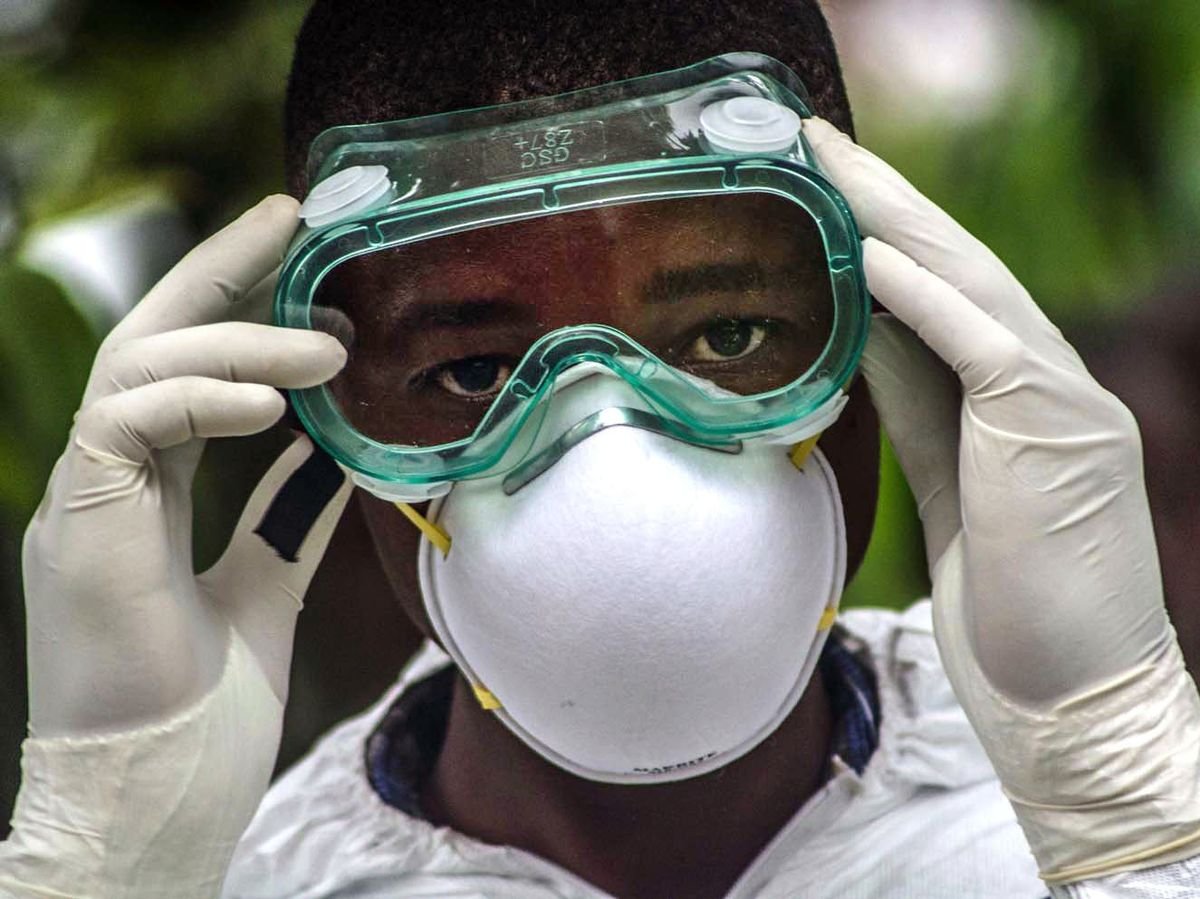
The World Health Organization has issued a fresh warning over the growing spread of the Bundibugyo strain of Ebola in the Democratic Republic of the Congo and neighboring Uganda, saying the outbreak is expanding faster than current response efforts can contain.

Speaking during a virtual ministerial briefing organized by the Africa Centres for Disease Control and Prevention, WHO Director General Tedros Adhanom Ghebreyesus described the situation as extremely challenging and warned that conditions may deteriorate further in the coming weeks.
- The World Health Organization has sounded a fresh warning over the growing Ebola outbreak in the Democratic Republic of Congo and Uganda, saying the situation could become worse in the coming weeks.
- Health officials have now raised the risk level in DRC from high to very high, with neighboring countries urged to strengthen preventive measures.
- According to WHO, ongoing insecurity, displacement of thousands of people, and delayed detection are making efforts to contain the outbreak more difficult. The organization also noted that there are currently no approved vaccines specifically for the Bundibugyo strain of Ebola.
- Despite the growing concerns, WHO insists the outbreak can be controlled, but warns that faster action will be critical to prevent more lives from being lost.
Although 101 infections have so far been officially confirmed in the country, with 10 confirmed fatalities, Tedros explained that available figures likely do not reflect the true scale of the outbreak.
He revealed that on May 17, a Public Health Emergency of International Concern was declared after consultations with health officials in DRC and Uganda, alongside notifications from Africa CDC.
The WHO has also raised its national risk assessment for DRC from “high” to “very high,” while the regional threat level remains categorized as high.
Tedros cautioned countries sharing borders with DRC to quickly strengthen preventive measures, stressing that neighboring nations face increased vulnerability because of population movement and regional interactions.
In Uganda, authorities have confirmed five cases and one death linked to the outbreak.
He also praised Ugandan President Yoweri Museveni for suspending this year’s Martyrs’ Day gathering, an annual religious event that usually attracts millions of people.
According to Tedros, cancelling the event was an important decision that could help reduce the possibility of wider transmission.
The WHO chief further noted that ongoing insecurity and public distrust in parts of eastern DRC are making containment efforts significantly more difficult.
Recent violence in the regions of Ituri and North Kivu has reportedly forced more than 100,000 people from their homes, creating additional challenges for health surveillance teams and emergency responders.
ALSO READ:
Nigeria Weekly News Roundup: Politics, Economy, Health, Entertainment, and Lifestyle Updates (Sept 21–27, 2025)
How Updated Are You on Nigeria’s Gist Today?
He also explained that there are currently no approved vaccines or specific treatments designed for the Bundibugyo Ebola strain, which has only appeared during two previous outbreaks, first in Uganda in 2007 and later in DRC in 2012.
WHO recently met with health partners and researchers to assess available vaccine candidates, treatment possibilities, and diagnostic approaches.
Tedros disclosed that the organization has recommended prioritizing two monoclonal antibody options for further clinical studies, while also supporting evaluation of an antiviral drug known as obeldesivir for high risk contacts.
The trials are being developed in partnership with Africa CDC and the Collaborative Open Research Consortium on Filoviruses.
To support ongoing operations, WHO has already released about $3.9 million through its emergency contingency fund.
Despite concerns over the rapid spread, Tedros expressed confidence that the outbreak can eventually be controlled.
“We know this virus and understand how to stop it,” he said, while emphasizing that the biggest question remains how quickly the response can gain control before more lives are lost.
MORE ARTICLES:
What Are the Most Popular African Languages?
64 CNG-powered buses handed over to labour Unions, NANS by the Federal Government

Desauce Magazine is more than a blog, it is a cultural journal capturing the rhythm of Nigeria. From music and film to lifestyle and social issues, we tell stories that reflect the energy, struggles, and brilliance of our people.
About Author / Desauce Magazine
Desauce Magazine is more than a blog, it is a cultural journal capturing the rhythm of Nigeria. From music and film to lifestyle and social issues, we tell stories that reflect the energy, struggles, and brilliance of our people.