



Faith in Nigeria Is Loud, But Is It Still Honest?
- Desauce Magazine

- January 11, 2026
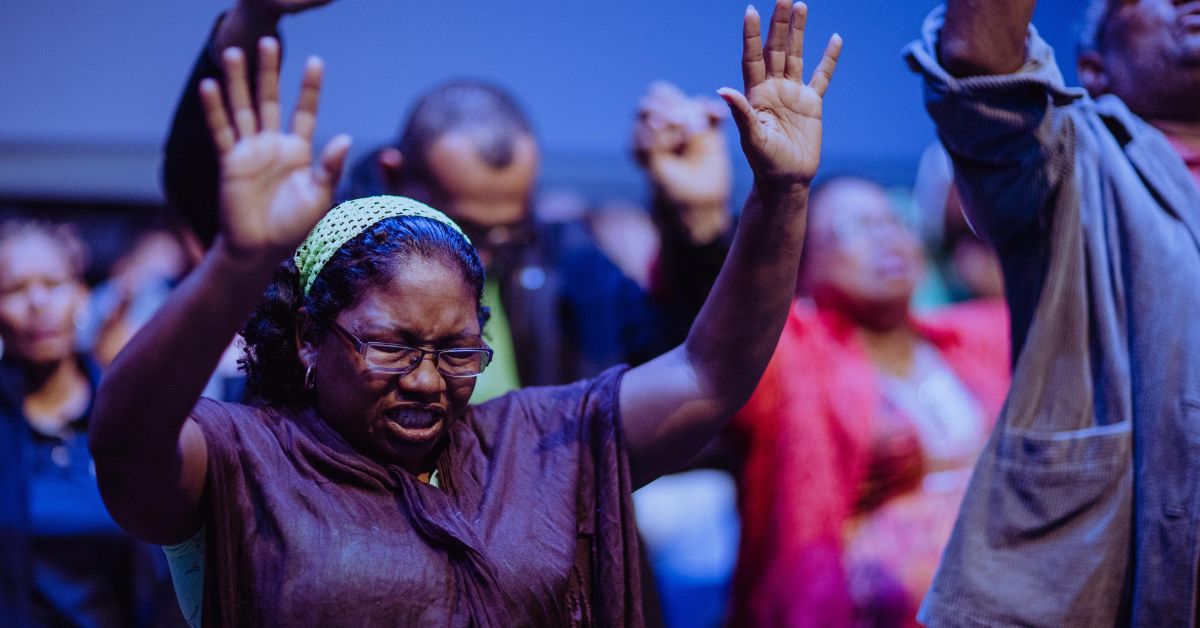
Let me ask you something gently. Not as an argument. Not as a challenge. Just as one Nigerian to another.

Have you noticed how loud faith has become here? You hear it before sunrise. You hear it in traffic.
You hear it on radio, on buses, in offices, on timelines. Prayer points everywhere. Declarations everywhere. Testimonies everywhere.
And yet, somehow, many of us feel tired. Not tired of believing. Just tired in a way belief was never meant to produce.
Nigeria is one of the most religious countries on earth. We say it proudly. We repeat it often. But sometimes, in quieter moments, a question sneaks in, the kind we do not say out loud.
If we pray this much, why do we still lie this easily? If we fast this hard, why does injustice still feel normal?
If God is this present in our language, why does honesty feel so scarce in our actions?
ALSO READ:
Culture Is Slowing Down in Nigeria, How a New Identity Is Quietly Taking Shape
Why Many Nigerians Are Rethinking Religion But Not Abandoning Faith
Faith in Uncertain Times, How Nigerians Find Strength When Life Gets Tough
“The Lost Art of Family Sundays: 10 Ways to Revive Togetherness”
At some point, faith stopped being something we carried quietly and became something we performed publicly. We learned how to sound holy. How to post scripture. How to say the right things at the right times. We became fluent in religious language, even when our private lives were speaking a very different dialect.
And the thing is, nobody woke up one day and planned it this way. It happened slowly. Applause started to matter more than alignment. Visibility began to feel like validation. The loudest voice in the room started to sound like the most anointed one.
So faith learned how to raise its volume. In churches. In mosques. On social media.
On stages with bright lights and better cameras.
Meanwhile, truth became quieter. We began to excuse bad behavior if it came wrapped in prayer.
We defended cruelty if it wore a religious title. We swallowed obvious lies because questioning them felt like rebellion. And somewhere along the line, belief started behaving like a transaction. Give this, receive that. Sow here, expect there. Pay now, miracles loading.
In a country where systems fail daily, it makes sense. When hospitals disappoint, people pray. When governments collapse, people kneel. Faith becomes the last place many Nigerians feel seen.
So no, this is not an attack on belief. Belief has kept this country alive more times than we can count. Faith built schools, hospitals, communities, hope. Faith carried families through darkness when nothing else showed up.
But there is a difference between faith that heals and faith that hides. And that difference is honesty. Honest faith does not protect power at the expense of people. Honest faith does not need noise to feel secure. Honest faith does not collapse when questioned.
Honest faith changes how you treat people when nobody is watching. That is the part many of us are quietly missing.
We pray loudly but live carefully around the truth. We quote scripture but negotiate integrity.
We shout amen, but whisper accountability.
And maybe that is why the noise feels exhausting now. Because deep down, we know volume was never the point. Faith was meant to steady us. To correct us. To soften us. Not to turn us into performers.
So maybe the real question is not whether Nigerians still believe in God. Maybe the harder question is whether we still believe that honesty matters.
Whether we still believe faith should cost us something internally, not just impress people externally. Whether we are brave enough to sit with quieter, uncomfortable truths instead of louder, comforting performances.
Because faith does not have to shout to be strong. It does not have to dominate to be real.
And it does not have to be everywhere to still be honest.
Sometimes, the truest beliefs speak softly. Sometimes, the deepest convictions do not trend. Sometimes, faith shows up not in what we declare, but in what we refuse to excuse.
And when that sinks in, you do not rush to stand up. You just sit there for a moment longer.
MORE ARTICLES:

Desauce Magazine is more than a blog, it is a cultural journal capturing the rhythm of Nigeria. From music and film to lifestyle and social issues, we tell stories that reflect the energy, struggles, and brilliance of our people.
About Author / Desauce Magazine
Desauce Magazine is more than a blog, it is a cultural journal capturing the rhythm of Nigeria. From music and film to lifestyle and social issues, we tell stories that reflect the energy, struggles, and brilliance of our people.