



Which Afrobeat Album Truly Rocked 2025? Why Davido’s 5ive Still Won

- January 9, 2026
<
For Afrobeats, 2025 was loud, crowded, competitive, and unforgiving. Top artists dropped albums that went viral overnight. New voices fought hard for relevance. Veterans fought to protect their crowns. TikTok turned songs into instant slogans. Spotify numbers became currency. Radio still mattered. And the streets, as always, had the final say.

This wasn’t a year where one album won by default. Several projects had momentum. Several had quality. Several had moments.
So when the question comes up, which Afrobeat album truly rocked 2025, it deserves more than a lazy answer. It deserves honesty. Not just about numbers, not just about critics but, about culture.
The Question That Actually Matters
This isn’t about which album was the most experimental. It’s not about which album critics respected the most.
It’s not even about which album sounded the “deepest.” The real question is simpler, and harder. Which album moved people? Which album people lived with? Which album followed them from streets to clubs, from weddings to gym playlists, from TikTok feeds to late night drives?
That’s where 5ive entered the conversation and refused to leave.
When Davido Dropped 5ive, It Became Unavoidable
From the moment 5ive landed, it didn’t creep into the culture, it announced itself. You heard it outside before you searched for it. You heard it at parties before you added it to playlists. You heard it on radio before you argued about it online.
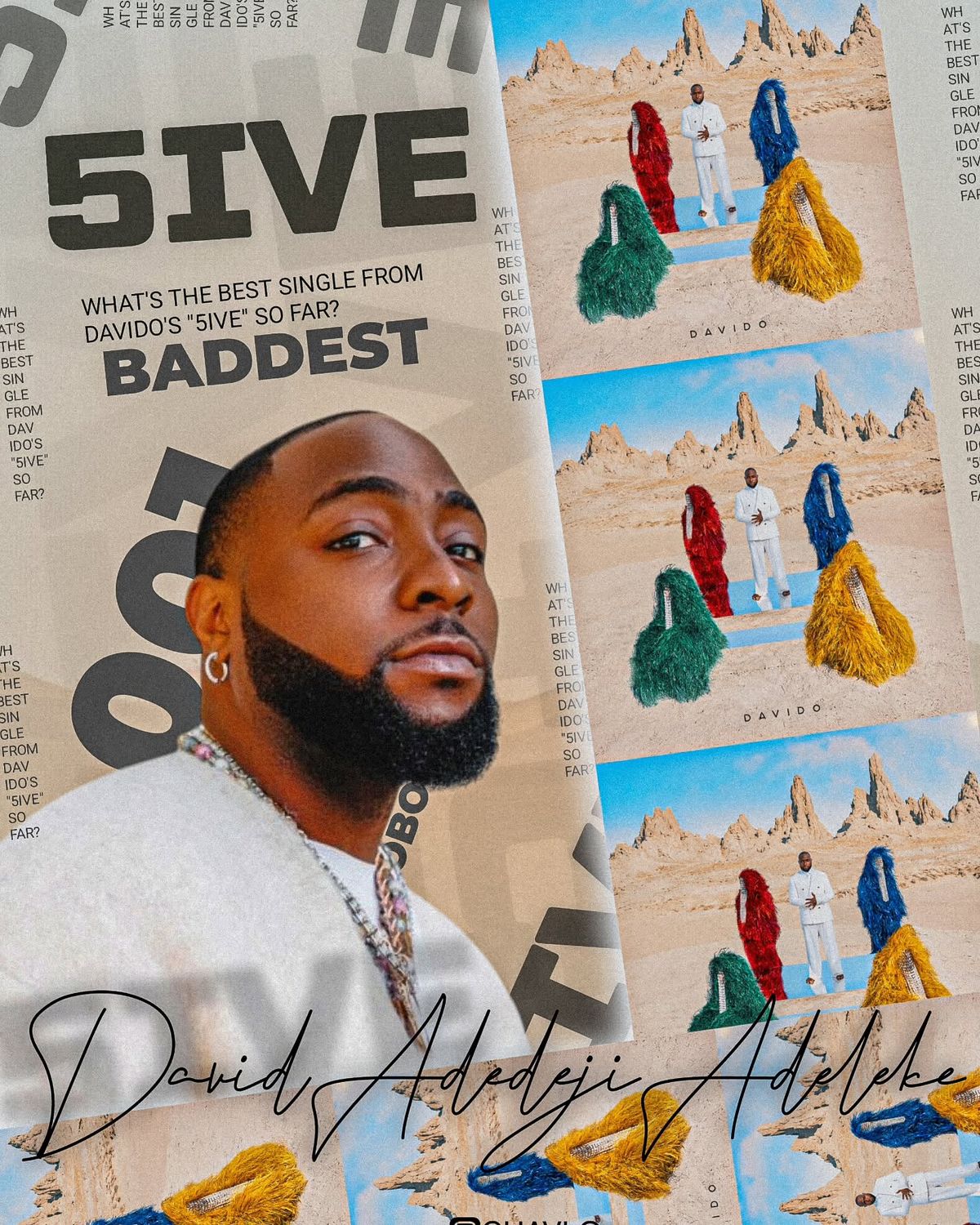
Globally, 5ive opened with about 15.3 million Spotify streams on its first day, the biggest opening for a Nigerian project in 2025, and it became the first African album to place 12 songs on the UK Spotify Daily Songs Chart – a milestone that signals not just popularity but true international infiltration of Afrobeats into mainstream listening habits. It rewired how global listeners understood African music beyond “world” playlists, planting Afrobeats in everyday rotation.
Spotify wasn’t the only platform playing keep-up. Apple Music Nigeria crowned it No.1, and its tracks sat persistently high across multiple charts – many beyond Nigeria – showing 5ive wasn’t a regional fad, it was a global connective tissue between cultures.
The cultural imprint wasn’t only in streams, it was in how people moved, danced, dressed, and spoke. I saw TikTok challenges grow from 5ive hooks, and fashion reels syncing outfits to Davido’s swagger – that’s a level of societal adoption that’s undeniably monumental.
From Lagos to London, from Accra to Atlanta, the album didn’t need translation. It simply fit. And yet, as loud as the reception was, the criticism came just as quickly.
The Critics’ Argument: “Davido Hasn’t Matured”
Industry critics were not whispering in 2025. They were clear. They said 5ive didn’t show enough artistic maturity. They argued that Davido didn’t evolve his sound. That the album stayed too safe.
That it didn’t represent a new creative era.
And here’s the part many fans avoid. Those critics weren’t lying.
ALSO READ:
All the Details About Davido’s Upcoming ‘5ive’ Album
DAVIDO AT 33, A NEW ERA AND A NEW RESPONSIBILITY
Why the Critics Are Right
From a purely artistic growth perspective, especially for listeners who value risk, experimentation, and reinvention, 5ive didn’t scream “new Davido era.”
If you line it up sonically against A Good Time or Timeless, the DNA is familiar. The same emotional palette.
The same romantic bravado. The same chest out confidence. There was no radical left turn. No sonic reinvention moment. No sharp departure from what Davido has always done.
So yes, the criticism stands. And that honesty matters.
But Here’s the Uncomfortable Truth Most Critics Avoid
Cultural dominance is not the same thing as artistic evolution.
And Afrobeats in 2025 was not decided in think pieces or studio debates. It was decided in real life. In streets,
clubs, weddings, gyms, TikTok feeds, car stereos, radio rotations, house parties, diaspora living rooms.
Culture does not wait for critical approval. Culture moves when music connects.
Why Davido’s Formula Still Works
Davido has never positioned himself as the artist pushing sonic boundaries for the sake of experimentation.
His strength has always been emotional familiarity. He makes music people instantly understand.
Music people can sing without effort. Music that fits real moments without explanation.
That relatability, that communal energy, is not accidental. It is his lane.
And in 2025, while many artists chased reinvention, Davido leaned into mastery. Control. Confidence. Knowing exactly what people expect and delivering it cleanly.
Sometimes evolution isn’t about change. Sometimes it’s about precision.
Why 5ive Still Won the Year
Despite the maturity critique, 5ive did things no other Afrobeat album did in 2025. It dominated streaming platforms consistently, not just during release week hype. It sat comfortably on radio playlists without feeling forced or over promoted.
It crossed borders naturally, the UK, the US, Europe, Africa, without being repackaged or reintroduced. It fed TikTok trends, Instagram reels, dance challenges, captions, slang, and street energy. It soundtracked real life moments, heartbreaks, celebrations, flex seasons, late nights.
This wasn’t just an album people respected. It was an album people lived with.
So Which Album Truly Rocked 2025?
If the question was about innovation alone, 5ive wouldn’t be the answer. If the question was about artistic reinvention, 5ive wouldn’t win.
But the question was never that. The question was which Afrobeat album truly rocked 2025. By the streets. By the charts. By radio. By virality. By global acceptance. By lifestyle impact.
The culture already answered. And the answer was 5ive
If I had to crown one album that genuinely defined Afrobeat/Afrobeats culture in 2025, in every conceivable dimension of impact – street adoption, radio omnipresence, international acceptance, massive streaming footprints, virality across TikTok and social channels, and literal lifestyle influence, that honor rests with: 5ive by Davido
MORE ARTICLES:
Wizkid and Asake’s REAL Vol. 1 Could Be the Most Important December EP in Nigerian Music This Year
Seyi Vibez Levels Up on Fuji Moto, Here Is Our Verdict
Olamide Reigns London: A Night That Proved Street-Hop Still Owns the Throne
Tems Just Built Her Own Kingdom, and This EP Feels Like the Key
How African Sound Is Taking Over the Grammys and Changing Global Music Forever

Desauce Magazine is more than a blog, it is a cultural journal capturing the rhythm of Nigeria. From music and film to lifestyle and social issues, we tell stories that reflect the energy, struggles, and brilliance of our people.