



America’s Christmas Strike in Nigeria, Facts, Reactions, and What Comes Next

- December 27, 2025
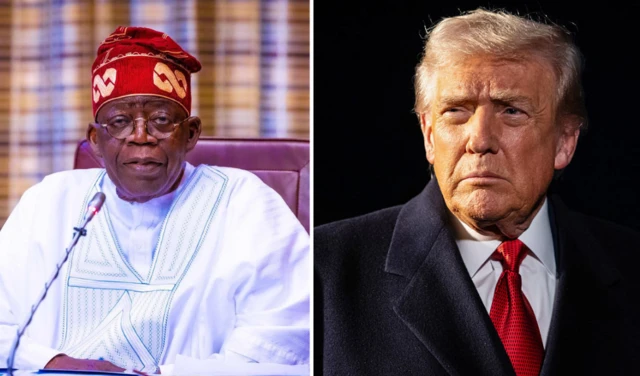
What Happened During the Christmas Bombing in Nigeria

On Christmas night, December 25, 2025, the United States carried out a military airstrike in Nigeria, targeting suspected terrorist camps in Sokoto State. The operation, confirmed by both Nigerian authorities and the US military, was aimed at Islamic State, ISIS affiliated fighters operating in forested areas in northwestern Nigeria. It marked one of the most direct foreign military actions on Nigerian soil in recent years.
The strike took place in the early hours of December 26, triggering shock, confusion, and widespread discussion across the country. While officials described it as a precision counterterrorism operation carried out with Nigeria’s approval, the timing and scale immediately raised questions. Why did the United States strike in Nigeria? How was the operation coordinated? And what does it mean for Nigeria’s security going forward?
Beyond the official statements, Nigerians experienced the event in different ways. In communities near the strike zone, residents reported loud explosions, shaking buildings, and fear through the night. Across the country, citizens woke up to news of a foreign military strike, not with celebration, but with uncertainty. For many, the bombing reopened long standing concerns about terrorism, retaliation, sovereignty, and the true cost of international security partnerships.
How It Happened, Coordination, Not Invasion
One thing both governments were quick to clarify was this, the strike was not carried out without Nigeria’s consent.
Nigerian officials confirmed that intelligence was shared, approvals were granted, and the operation fit within a broader counterterrorism framework. The United States Africa Command said it acted against specific ISIS targets, describing the operation as limited and precise.
Reports suggest the strikes were conducted using advanced US military capabilities, including precision guided munitions launched from offshore or regional platforms, though exact technical details have varied across reports. What is consistent is that this was not a random action, but a coordinated one.
Still, coordination does not erase consequence.
ALSO READ:
The Digital Rebellion: How Nigerian Youth Are Using Social Media to Rewrite Politics
Stripped, Beaten, Humiliated, The Viral Video of a Corps Member in Anambra Sparks Outrage Across Nigeria
Casualties and Damage, What We Know and What We Don’t
Officially, both Nigerian and US authorities stated that no civilian casualties were recorded in the immediate assessment. The United States confirmed militant deaths but did not publish numbers.
On the ground, however, the experience was different. Residents in communities near the strike zone described buildings shaking, the sky glowing, and widespread fear as explosions echoed through the night. In some areas far from Sokoto, including parts of Kwara State, residents reported hearing explosions and seeing debris, triggering panic and confusion before clarity emerged.
This gap between official language and lived experience is important. Even when civilians are not physically harmed, shock itself becomes a form of impact.
How Nigerians Reacted, Shock Before Celebration
There was no nationwide celebration. The first reaction across social media and communities was disbelief. Many Nigerians expressed fear about retaliation. Others questioned why such a strike happened at all, and what it meant for national sovereignty.
Some welcomed it, arguing that terrorist enclaves had existed for too long without decisive action. Others worried that foreign involvement could escalate violence rather than end it.
What united both sides was uncertainty.
Government Response, Strength with Caution
The Nigerian government framed the strike as part of a broader counterterrorism effort, emphasizing sovereignty, approval, and intelligence sharing. Officials pushed back against narratives that framed the operation as religiously motivated, stressing that extremist violence has affected both Christians and Muslims across the country.
This clarification mattered, especially after some US political figures framed the strike in religious terms, language Nigerian authorities quietly rejected.
What This Means for Security
In military terms, such strikes often have short term and long term effects.
Short term, terrorist camps are disrupted. Equipment is destroyed. Movement is interrupted. Leadership structures are shaken.
Long term, however, the picture is more complex.
Militant groups often respond with two strategies, attempts at reprisal, and propaganda. They may use the strike to recruit, claiming foreign invasion or local betrayal. This is why the weeks following such operations are often more critical than the strike itself.
What Comes Next for the United States
Based on official signals and historical patterns, several outcomes are likely.
Continued intelligence cooperation between Nigeria and the United States, including surveillance and targeting support.
The possibility of further strikes, if Nigerian authorities approve and intelligence continues to identify high value targets.
Increased political debate within Nigeria about sovereignty, cost, and control, especially if civilian fears grow or if any retaliatory attacks occur.
For the United States, the operation reinforces its role as a counterterrorism partner in West Africa. But it also places responsibility on Washington to ensure that involvement does not deepen instability or feed narratives of foreign dominance.
The Bigger Question Nigerians Are Asking
The real question is no longer whether the strike was successful, it is whether it will make Nigerians safer.
Military action can disrupt terror networks, but it cannot replace long term solutions, intelligence driven policing, border control, local trust, economic stability, and political accountability.
Nigeria has seen victories announced before. It has also lived with the aftermath.
This is why many Nigerians are watching quietly, not celebrating, not panicking, just waiting to see what follows. Because in this country, what comes after the explosion often matters more than the explosion itself.
MORE ARTICLES
From Zero to Viral: Why Bad Behaviour Pays Better Than Brilliance in Nigeria
Nigeria Weekly News Roundup: Politics, Economy, Health, Entertainment, and Lifestyle Updates (Sept 21–27, 2025)
Nigeria Weekly Recap, Adamawa Floods, Katsina Malnutrition Deaths, Super Falcons’ Historic Win, and Social Media Buzz

Desauce Magazine is more than a blog, it is a cultural journal capturing the rhythm of Nigeria. From music and film to lifestyle and social issues, we tell stories that reflect the energy, struggles, and brilliance of our people.